I am not at all surprised that no one guessed the identity of last week’s mystery seeds, because they are not considered landscape plants. They do, however, have some attributes that may make them an important agricultural crop. The plants are commonly called Lesquerella or Fendler’s Bladderpod, Physaria fendleri (or Lesquerella fendleri).

Lesquerella plants are not particularly big or noticeable. They have pretty yellow flowers and are in the mustard family.
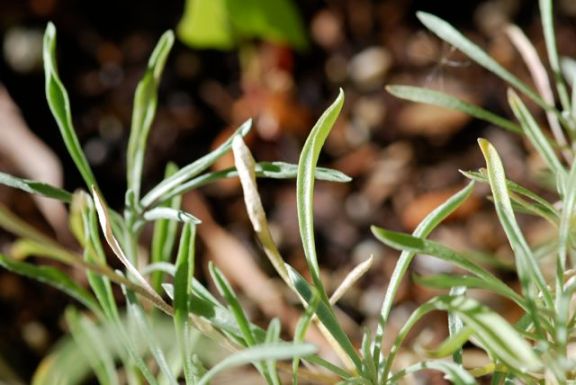
The leaves are small, grayish-green and covered with pubescence or fine hairs.

Fendler’s bladderpod, and a number of related species, are found growing wild throughout the Southwest and northern Mexico. They are perennials.

The plants get their common name “bladder pod” from the round seed pods. Each pod contains roughly 10-20 seeds.

The seeds contain some interesting oils, which is why these nondescript plants are receiving some extra attention. The oils are being investigated for their potential to replace oils and waxes from petroleum products for industrial uses, such as lubricants and cosmetics.
Lesquerella could be a small plant with tiny seeds and a big future.
Purdue University has links to more information about Lesquerella.


