

Hint:Â These seeds are about the size of a large pea.
What do you think they are?
Edit:Â The answer is now posted.
Hint:Â These seeds are about the size of a large pea.
What do you think they are?
Edit:Â The answer is now posted.
We didn’t get any guesses last week for the mystery seed. I was hoping that someone would bite into a sweet, dried fruit, pull out the seed and say, “Aha! The mystery seed was a date seed!”

There are a lot of palm trees growing in the Phoenix metropolitan area of Arizona. One of my favorites is the date palm.
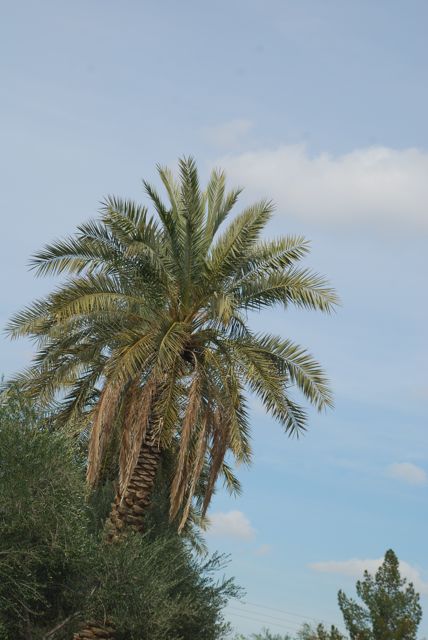
They have a lovely shape.

Although Phoenix dactylifera is the scientific name, date palms are probably originally from northern Africa.

Date Tree photo self-taken for Wikipedia by Balaram Mahalder
There are a number of different cultivars of date palms. The fruit vary somewhat in shape, size, and of course, flavor.
The book, A Seed is Sleepy, by Dianna Hutts Aston and Sylvia Long, tells about a scientist finding a seed of an extinct date palm that was thousands of years old. When the scientist planted the seed, it grew!
See if you can find a date seed and plant it (just make sure it hasn’t been cooked). Let me know if you grow one.
What fun, another science at home project. This one is called GLOBE at Night, and investigates the amount of light pollution around the globe. All you need to do is locate the constellation Orion and record what you see. Measurements are to be taken between March 3 -March 16, 2010. Go to the website for instructions and information packets.
Even if you don’t want to participate, check out the way the constellation Orion appears to us under different “magnitudes.” According to the site, magnitude is how astronomers describe the brightness of an object.
While you are at it, compare what you see to this view of Orion from the Hubble Telescope (Image from NASA Images).

What magnitude is the view in your area?

For more information, see Roberta Gibson Writes.
© 2026 Growing With Science Blog
Theme by Anders Noren — Up ↑