Growing With Science Blog

Putting the fun back into scientific exploration

Archive for February, 2009

Bug of the Week: Crane Flies

Feb-25-2009 By Roberta

With all the rain this winter we’ve had an emergence of large insects that look somewhat like a giant mosquitoes or what my neighbors called “long-legged wasps.” Here is what they are seeing (the thumb is for scale).

crane fly

They have nothing to be concerned about. This big, fragile fly is called a crane fly.

Crane fly adults are often over an inch long with two flimsy wings that they hold straight out from their sides when at rest. Although their appearance is unusual, crane flies are truly gentle giants of the insect world. They don’t bite or sting. In fact, they do not even feed as adults. Their only interest is finding other crane flies.

The photo of the adult was from a few years ago. This afternoon my son found the larva while digging in some soil.
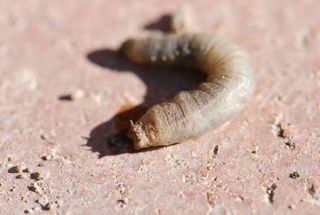
crane fly larva

The larval stages of crane flies are sometimes called leatherjackets because of the leathery-looking covering over their bodies. I was able to capture the end of its abdomen as it crawled away, so you can see the tubes it breathes with when it is under water. You can see the outline best in the shadow behind it.

The larvae munch on dead leaves piled up in wet areas, part of nature’s clean up crew. With all the rain storms we’ve had lately, the crane flies have had a lot to eat and so we have a lot of them.

crane fly larva

Interestingly, the larva emitted a brownish substance from the tip of its abdomen as it crawled away, almost like the “chewing tobacco” that grasshoppers make from their mouths if you pick them. I’ve never read anything about crane fly larvae having chemical defenses, but that’s what it looked like.

I’m afraid this larva was moving too fast for a good photo. For better views, you might want to check these truly spectacular photos of crane flies.

Meet a Scientist?

Feb-23-2009 By Roberta

What do you think of when you hear the word “scientist?” The classic visual of a person in a white lab coat peering into a glass tube filled with colorful liquid? Someone tucked in a laboratory somewhere, far from the real world?

Actually, nothing could be further from the truth. I think it would be helpful for children to choose a career in science if they knew what scientists really do and what they really are like. To help children learn more about scientists I’m considering having a “Meet a Scientist Monday” as a regular post. Let me know if you like the idea and even better, if you know of a scientist who would be willing to let me interview him or her.

Here’s an example of a scientist, using information from Dr. Thomas Eisner’s book, “For Love of Insects” and from his website (go visit it just to see his photographs and his FanciFul Designs).

1. What is Dr. Eisner’s scientific field?

Dr. Eisner is a chemical ecologist. That means he studies how insects and other arthropods communicate and defend themselves using chemicals.

2. Does he spend all his time in a laboratory?

No, Dr. Eisner does much of his work outside in natural areas. In fact, he calls himself a field biologist. Dr. Eisner is also a nature photographer, as you can see from his website.

3. Did he always want to be a chemical ecologist?

Dr. Eisner always liked insects, and his father was a chemist, but he didn’t become a chemical ecologist until after he got his PhD degree. He says he had the idea in his mind that he would like to study chemicals and insects, but it wasn’t until he found a special beetle called a bombardier beetle that he was actually able to do it.

4. Where does he work?

Dr. Eisner is a Professor at Cornell University.

5. Why do you call him Dr. Eisner? Is he a medical doctor?

Many scientists go to graduate school for a a degree called a doctorate of philosophy or PhD for short. Anyone who gets a doctorate is called Dr.

6. Does he wear a laboratory coat?

I met him when I went to school at Cornell and he just wore regular clothes.

Do you have any other questions about Dr. Eisner? If so, let me know.

Here is information on two books by Dr. Eisner written for interested adults:

For Love of Insects by Thomas Eisner

Secret Weapons: Defenses of Insects, Spiders, Scorpions, and Other Many-Legged Creatures
by Thomas Eisner, Maria Eisner, and Melody Siegler

Planning a children’s garden can be done any time of year, but right now is a great time to get started. Some of my fondest memories of childhood are of the seed catalogs that would arrive in the mail in the late winter. The snow would still be deep outside, but my sister and I would go through them all, making lists of all the wonderful things we wanted to grow. Of course our paper gardens far exceeded our space, energy and funds. But boy, was it fun to dream.

children's garden

Planning a garden isn’t just enjoyable, however, it also can be a wonderful learning experience. By giving your child the freedom to design his or her own space, a budget to work with and a few simple tools, you can have a project that builds a lifetime of skills and memories. Over the next few weeks, let’s cover several fun gardening activities. We’d love to hear your suggestions for projects or resources.

Types of Gardens
First help your child decide on the type of garden he or she would like to plant. Does your child like vegetables? Then a kitchen garden would be perfect. Other types of gardens might be flower gardens or herb gardens. You might want to check our previous posts on theme gardens and theme gardening books for ideas.

Planning
Your local Cooperative Extension office is likely to have information about gardening with children. For example, the University of Illinois Extension has a Planning My Garden area for kids with information on how to grow different plants just a click away. The Colorado State Cooperative Extension has a friendly Gardening with Children website with a section on planning a garden.

If you want to be part of an organization, take a look at the Cooprative Extension’s Junior Master Gardener Program. They have curricula for sale and links to gardening books that have been reviewed and recommended.

Gardening Curricula

If you have had gardens in the past and want to expand your learning experiences even more, now is the time to plan garden activities, too.  These days there are a number of websites and organizations devoted to gardening with children and often they have free curricula. For example,  Kidsgardening.org has a wonderful Pollinator curriculum. While you are there, take a look at the article: Turning Kids On to gardening, as well.

If you want to have the seed catalog experience, here are some links to seed company websites. Most are still willing to send a paper copy of their catalogs, if you want one. These are just the first few that came to mind, no endorsement is implied. Many of these websites also have a wealth of information about gardening. Hope you spend a few minutes and do a little garden dreaming, too.

Burpee
http://www.burpee.com/

Gurney’s Seed and Nursery Company
http://gurneys.com/default.asp

Johnny’s
http://www.johnnyseeds.com/home.aspx?ct=HG

Park Seed Co.
http://www.parkseed.com/webapp/wcs/stores/servlet/StoreCatalogDisplay?catalogId=10066&storeId=10101&langId=-1&mainPage=page1

Seeds of Change
http://www.seedsofchange.com/

Seed Saver’s Exchange
http://www.seedsavers.org/

bean seed