Category: Bug of the Week (Page 195 of 219)

Bug of the Week: Rose Aphids

Aphids are typically active only during the cool part of the spring season in Arizona, so now is when we see aphids.

Every wonder how aphids show up? After all, it looks like they don’t have wings.

rose aphids

These are rose aphids. Aren’t they a lovely pink color? By the way, the long tubes on their backs are called cornicles. Aphids emit chemicals from the cornicles. Some of the chemicals alert other aphids of danger (alarm pheromones) and/or actually deter enemies (defensive compounds).

The first aphids to arrive on your plants do have wings, like this one. They aren’t strong fliers and mostly they are carried in the wind.

rose aphids

The winged ones quickly have live babies.  Unlike most insects, these aphids do not lay eggs during this part of the life cycle.

I’ve circled the baby aphids in this photo.

rose aphids

I’m not worried about seeing these aphids. Even if I do nothing at all, they will disappear as the weather warms up.

For more information, try:

Cicadas and Aphids: What They Have in Common (Animals in Order Series) by Sara Swan Miller


Aphids (Blastoff! Readers: World of Insects) by Colleen Sexton


Disclosures: I am an affiliate for Amazon. If you click through the linked titles or ads and make a purchase, I will receive a small commission at no extra charge to you. Proceeds will be used to maintain this self-hosted blog.

Bug of the Week: Oleander Aphid

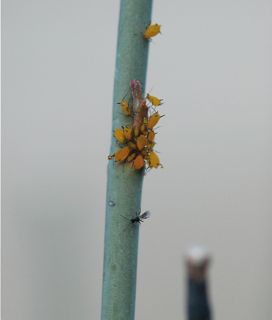
Oleander aphids, Aphis nerii, are bright yellow and black insects found feeding both on oleanders and various species of milkweeds. Interestingly, both milkweeds and oleanders are poisonous.

See if you can notice something about the next few pictures of oleander aphids on our desert milkweed.

oleander aphids

oleander aphids

oleander aphids

Both my son and I noticed right away that the aphids are all crowded on the new growth, which is rather reddish in color.
aphid wasp
Aphid colonies, as they are called, are often hotbeds of intrigue and danger. A tiny parasitic wasp is attacking the aphids on this branch (see just below the cluster of aphids). The wasp lays her eggs within the body of the aphids. The larva of the wasp feeds inside the aphid, eventually turning it into a brown, hardened structure called a “mummy.”

oleander aphids

The coppery brown circles towards the bottom of the colony are mummies. Inside the mummy the wasp pupates. Eventually the adult wasp cuts a hole through the mummy and emerges into the world.

Although usually merely regarded as garden pests, aphids are actually interesting creatures, They are also food for a number of different forms of wildlife. I leave these aphids alone because I know that the wasps, lady beetles and flower flies that feed on the oleander aphids will also feed on any other aphids drifiting into my garden.

« Older posts Newer posts »