Page 156 of 561

Seed of the Week: Tobacco

Our mystery seeds from last week are from a plant that is widely-grown, but is rather a specialty crop:  tobacco, Nicotiana sp.

tobacco-plant

Nicotiana tabacum, or cultivated tobacco, is the plant most people associate with tobacco. It is usually grown as an annual, although it is a perennial species.

tobacco-flowers

Tobacco has pink, tubular flowers.

Nicotiana_tabacum_(Public domain illustration from Franz Eugen Köhler, Köhler’s Medizinal-Pflanzen, available at Wikimedia)

mystery-seeds-239

These little seeds can grow into a plant eight or more feet tall.

The plants in the photographs above were being grown for research. In fact, the tobacco plants that may be condemned as a crop turn out to be a secret weapon in research labs. They are considered to be model plants because they are easy and fast to grow, plus they have qualities that make them ideal for certain types of experiments.

A relative from northern Australia, Nicotiana benthamiana, is also used extensively in research labs throughout the world. Because it is so easy to infect with plant diseases, it is widely used by plant virologists and pathologists (reference). Its genome has also been well-studied, making is useful for genetic experiments.

It turns out tobacco is the fruit fly and lab rat of the plant world. All in all, tobacco is a plant that is full of contradictions.

Activities to Celebrate Pi Day

What is Pi Day?

Pi Day has been celebrated each year on March 14 (3/14) as a fun salute to pi = 3.14…  This year, Pi Day will have special significance because 3/14/15 at 9:26:53 a.m. and p.m. will represent the first 10 digits of pi. Plus, March 14 happens to be Albert Einstein’s birthday. Cool!

pi-day-symbol

What is Pi?

Pi is is the ratio between the circumference (distance around a circle), and the diameter (the distance across the circle). It written as p in Greek alphabet, which is the symbol π. Pi is an infinite decimal with a value 3.14159265358979323846…

Want more details? SciShow has an explanation of pi useful for older students.

Activities for Pi Day:


pi-pancake-front

1. Baking

It has become somewhat of a tradition to bake a pie to share for Pi Day with a π symbol on it. Another option would be to make π pancakes. Simply make a π shape out of pancake batter and let it brown, then add more pancake batter over the top to fill in the pancake. Or you can use a dark pancake batter, such buckwheat, to create the π symbol and a lighter batter for the background.

2. Toothpick Toss

One way to calculate pi involves comparing the circumference of a circle to the diameter. Another way is to count how many toothpicks (or other similar objects) fall in a certain way when thrown at a series of parallel lines.

Gather:

  • Toothpicks (matchsticks also work) – at least 100
  • Cardboard or poster board surface to draw lines on
  • Ruler
  • Marker (such as Sharpie)
  • Calculator (optional)

Draw several parallel lines on the cardboard or poster board with the distance between each line exactly equal to the twice the length of a toothpick. Randomly toss toothpicks onto the lined surface, keeping track of the total number of toothpicks tossed. When you are done, count each toothpick that has landed crossing a line in any way. 

Divide the total number of toothpicks tossed by the number of toothpicks that crossed the lines. See how close to pi your estimate is.

For more details and slightly different methods, check Estimating pi by dropping sticks (with a simulation to try) at SciFriday. Exploratorium also has a discussion the toothpick toss and other Pi Day Activities.

3. Read a Pi Day Book

Sir Cumference and the Dragon of Pi (A Math Adventure)
by Cindy Neuschwander and illustrated by Wayne Geehan

Meet the regulars in King Arthur’s court, such as Sir Cumference, his wife Lady Di of Ameter, their son Radius, and the carpenter, Geo of Metry. When Sir Cumference turns into a dragon, can his family and friends use math to save him? Although it looks a bit like a picture book, the concepts are actually for middle grades.

For more book suggestions, check the list of Math Books for Pi Day and Every Day at Science Books for Kids.

pi-day-books

Want more? There’s a plethora of links to all things pi at Joy of Pi.


Disclosure: I am an affiliate with Amazon so I can provide you with cover images and links to more information about books and products. As you probably are aware, if you click through the highlighted title link and purchase a product, I will receive a very small commission, at no extra cost to you. Any proceeds help defray the costs of hosting and maintaining this website.

Zoology Science Activities for Kids

Our post today is inspired by a new middle grade children’s book, Zoology for Kids: Understanding and Working with Animals, with 21 Activities (For Kids series) by Josh Hestermann and Bethanie Hestermann with a foreword by The Kratt Brothers. The book is so awesome I want to share it by giving away a copy.  See below for details on how you can enter to win a paperback copy of this book.


Josh Hestermann is a zoologist/zookeeper and his wife, Bethanie Hestermann, is a writer. Together they explain what zoology is (the study of animals) and what an animal is, and then give a lively introduction to the science of zoology. The second part describes common career options for people who want to work with animals. Sprinkled throughout are hands-on activities for middle-grade-aged children, such as baking a model of an animal cell, playing a dolphin echolocation game, eating a bat fruit salad, and planning an animal’s exhibit for a zoo. See our sister blog, Wrapped in Foil, for a full review.

Related Activity:  Making Animal Books

Gather:

  • Photographs of animals (from old magazines, the Internet, take photographs at your local zoo, or see these public domain line drawings)
  • Spiral notebook or binder with 3-hole paper (or an artist’s sketch book)
  • Crayons, markers and colored pencils
  • Glue stick or tape

Version 1. Animal Alphabet Book for the Youngest Set

Create a page for each letter of the alphabet. Try to find an animal or animals whose name starts with each letter. Don’t forget that fish, reptiles, amphibians, birds, and invertebrates are also animals.

Glue or tape the pictures on the page. Draw the letters and add the animal’s name.

For older children, have them add information about the animals, such as what they eat and where they live, maps, etc. Encourage them to draw pictures as well as write the text.

Examples:

anteater-page-1zebra page

Looking for an animal with a name that starts with X? Suggestions:

  • Ground squirrels in the genus Xerus
  • X-ray tetra fish
  • Swordfish in the genus Xiphias
  • Xantus’s hummingbird

zoo-visayan-warty-pig

Did you take a picture at the zoo and now can’t remember what kind of animal it is?

Hint:  Try an Internet image search to see if you can find matches. Just be careful to look for reputable sources.

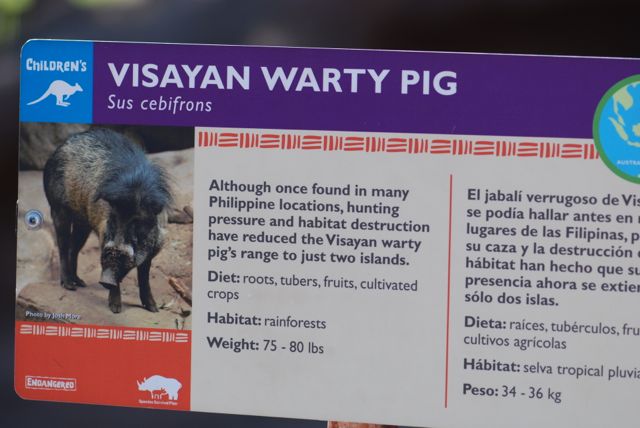
Another hint:  If you go on a trip to the zoo to take photographs, take a few photographs of the signs as well. This will help you remember which animal is which and also gives you more information to talk about when you get home.
zoo-sign

Turns out this one can be used for the letter V!

Version 2: Animal Phyla (For older children)

For older children, consider exploring the phyla that make up the Kingdom Animalia by making a scrapbook or presentation. See our previous post for details (because it got too long to be included here).

Related:

Extensive interview with a Zoo Docent here at Growing With Science

Zoology for Kids website

______________________________

GIVEAWAY

Would you like to try to win a copy of Zoology for Kids? Simply sign into Rafflecopter (U.S. mailing addresses only, please). It will ask you to leave a comment on this blog post and/or like our FaceBook page by March 14, 2015 at 12:00 a.m. Eastern Standard Time. A single winner will be selected at random by Rafflecopter and I will notify the winner via e-mail.

a Rafflecopter giveaway

__________________________________________

Age Range: 9 and up
Grade Level: 4 and up
Publisher: Chicago Review Press (March 1, 2015)
ISBN-10: 1613749619
ISBN-13: 978-1613749616

Disclosures: The book was provided by the publisher for review purposes. Also, I am an affiliate for Amazon. If you click through the linked titles or ads and make a purchase, I will receive a small commission at no extra charge to you. Proceeds will be used to maintain this self-hosted blog.


Come visit the STEM Friday blog each week to find more great Science, Technology, Engineering and Math books.


« Older posts Newer posts »