Page 474 of 561

Bug of the Week: Silkworms

It has been cold and rainy here this week, but we still have plenty of insects. You see, they are all indoors.

Here is the story of our silkworms in photographs:

We bought our caterpillars over the Internet. They arrived in a plastic cup. Look at all the colors!

The caterpillars ate a commercial food made up of dried mulberry leaves and thickeners. We bought some extra food from the supplier, because we weren’t sure we could find mulberry leaves. We made it in the microwave by mixing the powder with water and cooking it.

After a few weeks, we did find some mulberry leaves.

The caterpillars ate a lot of mulberry leaves.

The caterpillar makes silk with a gland that exits in its mouth.

When they are ready to pupate, the caterpillars start to make a silk bag around themselves, which is the cocoon. The cocoon is what is used to make the fabric silk.

When we did this before, all the cocoons were white. This time they were white, pale yellow and deep golden yellow. (The colors have to do with the mix of varieties we got.)

After about two weeks (depends on the temperature), the first moths emerged.

This is a male. Isn’t he cute?

The females laid eggs on other cocoons and on some cardboard egg cartons we provided.

silkworm-eggs2

The eggs are the size of pinheads or slightly larger. They are light to dark gray in color.

The best part of this project has been sharing the caterpillars and the stories with our friends.

For more information about silkworms, see Silkworms: A Thread through History, and also the link at the end of that post.

Related books (with Affiliate links to Amazon)

Silkworm (Life Cycle of a . . .) by Ron Fridell and Patricia Walsh

Age Range: 6 – 8 years
Publisher: Heinemann; 2nd Edition edition (August 15, 2009)
ISBN-10: 1432925458
ISBN-13: 978-1432925451

The Story of Silk: From Worm Spit to Woven Scarves (Traveling Photographer) by Richard Sobol

Age Range: 6 – 9 years
Publisher: Candlewick (September 25, 2012)
ISBN-10: 0763641650
ISBN-13: 978-0763641658

Seed of the Week: Acacia salicina

Did anyone guess last week’s mystery seed?

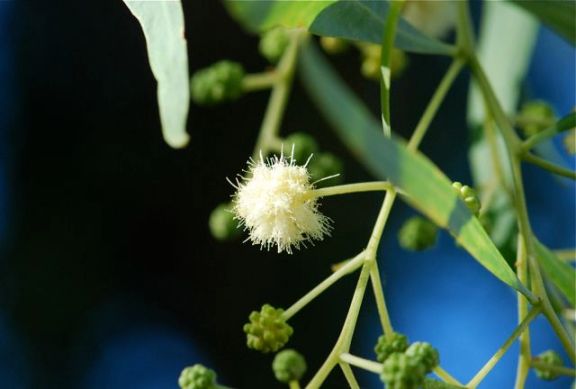
These seeds are from Acacia salicina, a tree native to Australia but also grown in the southwestern United States. It has various common names, one of which is “willow acacia,” because of its draping, willow-like appearance.

The powderpuff blossoms attract bees and butterflies.

After pollination, the flowers produce these:

Any guesses what the bright red or orange fleshy structures next to the seeds are? Those are very interesting. They are called “elaiosomes,” meaning literally “oily bodies.” The tail-like parts are like a brightly-colored potato chip stuck to the seed. The birds eat the potato chip part and often carry off the seed with it. They drop the seed unharmed when they are done. The seed is thus moved away from its parent or dispersed. Botanically the structure is called an “aril,” which has to do with what part of the plant the elaiosome is derived from.

For a great deal more information about the genus Acacia, see The Unforgettable Acacias

And now, without further ado, the:

I was a little easier on you this week. What kind of plant grows from a seed like this?

If you’d like more information on trees, try these books:

(Affiliate link to Amazon)

Astronomy Year End Activities

Did you know that 2009 has been the International Year of Astronomy? Let’s wrap up the event with some astronomy-related activities.

1. Explore Meteor Showers:

Did you look for the Leonid meteor shower last month?

(Awesome copyright-free images of space-related objects available at Nasa Images.)

Meteor showers happen frequently throughout the year. Although looking for meteor showers requires getting up in the night and standing patiently in the cold and dark, the streaks of light flashing across the sky are well worth it. This month the Geminid Meteor Shower will center on December 14, 2009, radiating from the star Castor. Look for local information about the shower, because in some areas it may start around 9:00 p.m.

2. Build a Telescope:

Edited:

You might also want to try the International Year of Astronomy Discovery Guides. The first one is all about telescopes. You do have to register to download.

3. The Solar System

The recent changes in the definition of the planets of the solar system, with Pluto no longer considered to be a true planet, is a great example of how science works. As we gather more information, our ideas change.

Here’s a fun video that explains “Why Isn’t Pluto A Planet Any More?”

Where to find more information and things to do:

Space Activity Links

NASA’s Planets and the Solar System has such hands on activities such as build a moon habitat and asteroid potatoes (they do look like potatoes!).

The Solar System at KidsAstronomy.com

Constellations for Kids at Astronomy for Kids Online

Exploring Space Without a Spacesuit at Leaping from the Box

Pick up a great book:

(For information about my affiliation with Amazon, see the Disclosure page.)

« Older posts Newer posts »