Page 479 of 561

New Science and Nature Books

Looking for children’s books? Have you gone to check out the Cybils website yet? The Cybils are awards created by bloggers who specialize in children’s and young adult books. People have nominated their favorite books published this year by genre. It is a great way to find new things to read.

I went through the list of nominated nonfiction picture books and picked out some science and nature books that you might find interesting and/or useful. (And by the way, I am a round II judge for this category.)

Nic Bishop Butterflies and Moths by Nic Bishop

Nic Bishop is an award-winning photographer and author, and this book is sure to win him more honors. His photographs of butterflies, moths and their caterpillars are fascinating. Not only does he get close up, but from an unusual angle or catching the subject in action. The photos can stand alone, but he adds a lyrical and informative text as well. If your children are interested in insects, be sure to take a look at this one.

For a more extensive review, see my children’s book blog, Wrapped in Foil.

For kids interested in space, we have books released just in time for the 40th anniversary of the moon landing.

Moonshot: The Flight of Apollo 11 by Brian Floca

Check out the trailers:

One Giant Leap by Robert Burleigh and Mike Wimmer (Illustrator)

Another version of the lunar landing, also well done.

This trailer is longer because it is a TV news interview with the illustrator Mike Wimmer. In the beginning they show some illustrations from the book. If your child is interested in art, the interview shows his studio and Mike painting.

Cars on Mars: Roving the Red Planet by Alexandra Siy

This one was actually nominated for the middle grade nonfiction category instead of the picture books because the text is more extensive and in depth than the usual picture book, but I thought you might want to take a look. Children’s book reviewers have been raving about it since its release. It is about the two Mars rovers, Spirit and Opportunity.

You Are the First Kid on Mars by Patrick O’Brien

This book really stretches the definition of nonfiction, because it details an imaginary trip to Mars. The scientific details and photorealistic illustrations are what make it credible.

Oceans/Aquatic life

Winter’s Tail: How One Little Dolphin Learned To Swim Again
by Juliana Hatkoff, Isabella Hatkoff, and Craig Hatkoff

I already wrote about some of the activities surrounding the release of this book in a previous post.
Winter’s Tail is the heartrending story of a young dolphin named Winter who lost her tail after becoming entangled in a crab trap line. After she healed, she was fitted with a prosthetic tail.

Bubble Homes and Fish Farts by Fiona Bayrock and Carolyn Conahan (Illustrator)

Parents might be put off by the word “fart” this title, but don’t be. It is a gem of a nonfiction book based on the scientific theme of how animals create and use bubbles. With soft watercolor illustrations and plenty of cutting-edge information, even the scientifically savvy will find something new here. For example, the “farts” are not flatulence, but Fast Repetitive Ticks (FaRTs) made by herring at night as a form of communication.

Down, Down, Down: A Journey to the Bottom of the Sea by Steve Jenkins

Steve Jenkins is an incredibly popular author of children’s nonfiction. Add some out-of-this world papercut illustrations and you have one unbeatable book.

Seven Impossible Things Before Breakfast blog has a more extensive review with spreads from the book.

And now, check out this really cool widget from Amazon. (I’ve provided information about my affiliation with Amazon in the the disclosure page – see button in the header of the blog).

Goats and Sheep, and… Science?

Someone asked me the other day for ideas for a science fair project using goats and/or sheep. Can you mix science and domesticated animals? Here’s a few ideas.

Public Domain Photograph by Jean Beaufort at Publicdomainpictures.net

Goats and sheep are amazing creatures. They were among the earliest animals domesticated by humans, second only to the dog. They occur throughout the world, along with their wild cousins like the mountain goats and bighorn sheep.

How are goats and sheep similar? How are they different? Do some research and create a Venn diagram.

1. Goat and Sheep Basics

Although they look somewhat similar, sheep and goats belong to different genera. The scientific name for sheep is Ovis aries. The scientific name for domestic goats is Capra hircus.

Female goats are called does or nannies.
Male goats are called bucks.
Baby goats are called kids.

Female sheep are called ewes.
Male sheep are called rams.
Baby sheep are called lambs.

Products we may get from goats:

  • Milk – used to make cheese, candy, milk, soap
  • Meat
  • Leather
  • Cashmere
  • Mohair
    Can also be used as pack animals.

Products we may get from sheep:

  • Milk – Yes, there are sheep dairies! – used to make cheese
  • Meat
  • Wool
  • Lanolin

If you are interested in food science, then find some goat and/or sheep milk and make some cheese.  You might compare the products from the two types of milk, or modify the process, for example comparing goat cheese made with lemon juice versus goat cheese made with vinegar.

2. What do goats and sheep eat?

Goats can eat many plants: shrubs, bushes, trees, aromatic herbs, even paper. But they don’t really eat tin cans. Goats eat many weeds and are used for weed control around the world. They even take care of poison ivy and poison oak. Study their diet in your area, and see if there are any differences in different habitats.

Sheep prefer to eat grasses.

Do sheep graze the same as goats? How are the two different?* (Answer at bottom)

3. Compare sheep and goat anatomy:

Sheep and Goats both belong to the Family Bovidae, which are hooved mammals with permanent horns. Horns are bony outgrowths that are covered with a sheath of material that is similar to a human’s fingernails. Horns are permanent, unlike antlers they are not shed. Most goats have horns, but they are usually dehorned while they are young. Most domesticated sheep breeds lack horns, although some rams still have horns. The wild versions of goats and sheep do have horns. The male bighorn sheep are known for their huge horns.

The hooves of goats and sheep grow over time, like our fingernails and so must be trimmed regularly. Although you might think hooves would be slippery to walk on, goats and sheep are remarkably agile. Goats can climb very well. Bighorn sheep can travel up steep mountains with ease.

4. Behavior

There are big differences between how sheep and goats behave. For example although both are herd animals, sheep tend to stick together whereas goats are more independent and curious.

Goats and sheep can also vary in behavior from breed to breed. You’ve probably heard of the specialized breed called fainting goats, which are goats that fall over when they are frightened.

If you have goats or sheep to study, you might want to examine differences in their response to novel stimuli, flocking behavior (like is one of the goats or sheep a leader?) or ability to learn, etc.

5. The Future?

For more futuristic science, check out this video of goats that have been modified to produce spider silk in their milk.

6. Read a Great Children’s Book

For a unit on goats and sheep for the youngest set, try these cute children’s books (covers are affiliate links to Amazon):

Charlie Needs a Cloak, by Tomie dePaola. Published by Simon & Schuster, 1973. From sheep, to yarn to cloak, this easy book follows the process of making cloth from wool.


Farmer Brown Shears His Sheep, by Teri Sloat. Published by Scholastic, 2000. A fast-paced, rhyming version of how wool becomes yarn. “ A yarn about wool.”

The Goat in the Rug as told to Charles Blood and Martin Link. Published by Four Winds Press, 1976. Story of a Navajo woman using goat wool to weave a rug.

*Sheep graze to the ground. Goats are browsers, which means they nibble on plants of all heights (as far up as they can reach).

Bug of the Week: Desert Encrusting Termites

Did you figure out the mystery insect from last week?

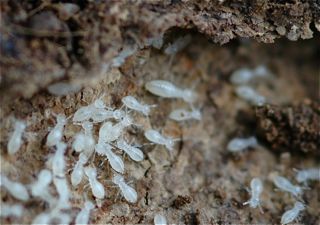
The patches of mud you see on the trunk of the saguaro are made by desert encrusting termites (Gnathamitermes sp., probably Gnathamitermes perplexus).

These desert termites build layers of mud on the bases of saguaros or palm trunks. They also plaster mud over dry grass or twigs on the ground, particularly after a rain.  Over time they eat the grasses or twigs, leaving a hollow tube of dried mud.

On trees, they gently scrape the surface clean of dead material.

Desert encrusting termites are different from other termites because they do not enter or eat sound, strong wood. They could even be considered beneficial. Have you ever heard that termites have protozoa in their guts to help them digest the cellulose in wood? Desert encrusting termites have bacteria instead. Those bacteria are capable of fixing nitrogen, which means they actually fertilize the soil. Because the termites work on dry grass and twigs on the ground, they reduce fuel for wildfires. Finally, by tunneling in and moving soil, they aerate it, making it better for plants.

You could say that desert encrusting termites are part of nature’s clean up crew.

« Older posts Newer posts »