 What do you notice when you see the owl on the cover of the new nonfiction picture book Whooo Knew? The Truth About Owls by Annette Whipple? Maybe the huge eyes? What do you think of? The sound they make? Have you ever seen an owl in real life?
The book starts out with these observations and a stirring question:
“You recognize an owl when you hear or see one, but do you really know these birds?”
From there, each double-page spread features gorgeous color photographs with text in a question and answer format. You will find out what owl’s eat, how they hunt, whether they sleep during the day, where they live, and what’s up with owl pellets. My favorite questions was whether owls can spin their heads around. Do you know the answer?
The formatting is super engaging, with eye-catching design elements and fun dialogue bubbles with cool facts. Great for visual learners.
Here at Growing With Science, we love back matter and the book does not disappoint. There’s a section on how to help owls, explanation of owl anatomy, owl pellet dissection discussion, and a glossary. The hardcover version even includes an Owl Superpowers poster, which you can see at Annette’s website.
Whooo Knew? The Truth About Owls is nonfiction at its best. It will obviously appeal to young birdwatchers and nature lovers, but also to anyone interested in the world around them. Reading it will make you wiser <wink>.
Note for sensitive young readers:Â Owls eat small rodents and the book contains pretty graphic photographs of that natural process. There’s also a close up of an owl pellet.
This book is part of The Truth About series. Annette tells us there’s Woof! The Truth About Dogs and another untitled book about spiders coming next year.
Related Activities:
- Owl pellet dissection
We previously talked about owl pellets when we reviewed Melissa Stewart’s Bird-acious, a book that comes with an actual owl pellet attached to the cover (see post).
2. Write an Owl Story
Have you ever seen an owl in real life? Write a short story about what you saw and how it made you feel. Do some research and learn more about them to add details to your story. Need help? Check Annette’s website for a lesson about the writing process.
If you post your story online, please leave a link in the comments.
For example:
One snowy day while cross-country skiing at a nature preserve in South Dakota, I passed a thicket of pine trees, dark green against the wintry white. A brownish blur passed in front of my face. It was an owl, flying. The stillness of the snow, the peacefulness of the setting, the silence of the owl in flight have all stayed in my mind since that day.
Other owls we have encountered:
We sometimes see small owls called burrowing owls here in Arizona. Because they nest in animal burrows, which have become rare, conservationists have started making artificial tunnels for them to nest in.

 What do you think these owls are doing?
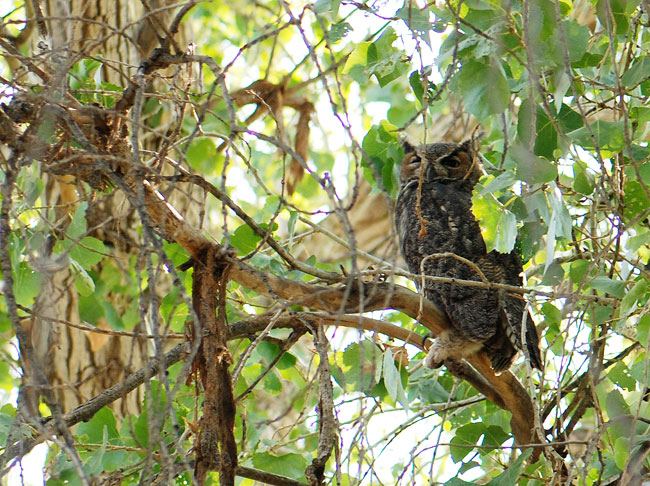 What about this great horned owl? I saw it in a cottonwood tree early one morning. We often hear them calling softly to each other just before dawn.
3. Interested in birds in general? Consider joining the Audubon’s 121st Christmas Bird Count which runs from Monday, December 14, 2020 through Tuesday, January 5, 2021. Details at their website.
4. Read more books about birds.
We have a growing list of excellent children’s books about birds at Science Books for Kids.
Reading ages : 6 – 10 years
Publisher : Reycraft Books (September 30, 2020)
ISBN-13 : 978-1478869627
ISBN-10 : 1478869623


Disclosure: ARC was provided by the author for review purposes. Also, I am an affiliate with Amazon so I can provide you with cover images and links to more information about books and products. As you probably are aware, if you click through the highlighted title link and purchase a product, I will receive a very small commission, at no extra cost to you. Any proceeds help defray the costs of hosting and maintaining this website.

Come visit the STEM Friday blog each week to find more great Science, Technology, Engineering and Math books.
 matches the cicada nymph exoskeleton on the tree, G.
 Cicada nymphs spend one or more years underground before they emerge as adults.

 The insect above, C, Is a honeybee, which build honeycomb below, L.
 The ladybug D, emerges from a ladybug pupa like the one below, I.


