Some plants and pollinators have unique relationships. Take the rush milkweed.
Most years our rush milkweed plants only produce one or two seed pods each.
 This year, however, the plants are covered with seed pods.
 Why?
Why?
To figure out, we need to go back a few weeks. At that time the plants were covered with flowers.
 We also saw a lot of tarantula hawk wasps visiting the flowers.
 Although they are clumsy giants, tarantula hawks are especially good at pollinating milkweeds. Their long legs slide into the grooves in the flowers, where they collect the sticky sacs of pollen called pollinia (for more information, see BugGuide). When the wasps visit the next flower, the process is reversed, leaving the pollinia behind to pollinate the plant.
This year the tarantula hawk wasps were abundant and now the seed pods are, too, which hopefully means
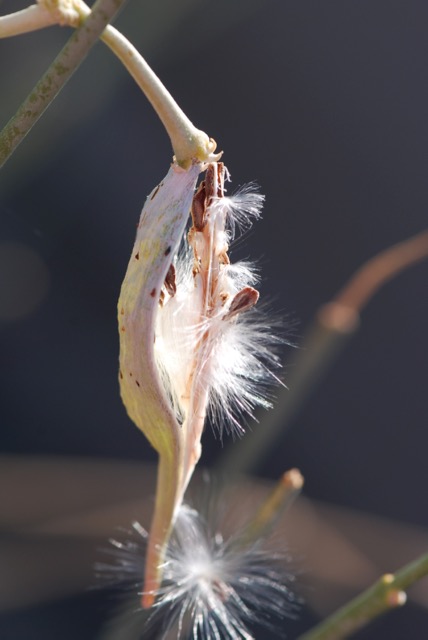
soon we’ll see more milkweed seeds,
 which will glide away on their silky parachutes to make more rush milkweed plants, which are

good for the monarch caterpillars that eat them, and
 which turn into monarch butterflies, important pollinators for many other wildflowers.
All thanks to tarantula hawks!
 For those of you who don’t see these giant cacti every day, saguaros usually flower in June, not September.
 The flowers usually open at night, but these are staying open well into the morning, which makes them accessible to day-active pollinators like these honey bees and the carpenter bee on the right.
 With all the buds, looks like they’ll be enjoying flowers for a few more days at least.


