
These blew into our yard this week.


Any ideas what kind of plant they are from?
Edit: The answer is now up.
These blew into our yard this week.
Any ideas what kind of plant they are from?
Edit: The answer is now up.
The mystery seed pods from last week have a wonderful odor.

In fact they smell sweet and faintly reminiscent of chocolate.
These pods are from a carob tree, Ceratonia siliqua, which is grown as a landscape tree here in Phoenix.

The carob trees were originally from the eastern Mediterranean region. They grow well in areas with little rainfall.

Each leaf is made up of 6 to 8 rounded leaflets.
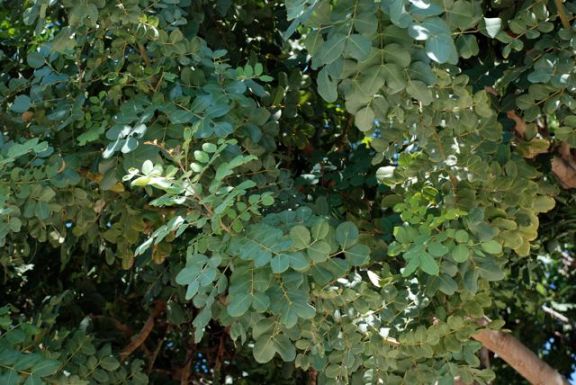
The tree retains its leaves and is green all year.
The pods start out green and then turn brown as they ripen. The hard seeds are inside.
To make carob powder, a chocolate substitute, separate the seeds from the pods. Roast and grind up the pods. Here in Phoenix, people harvest and mill both carob and mesquite pods. You can then use the carob powder to make brownies.
The carob seeds are used to make carob or locust bean gum, a thickener.
What an interesting plant!
Do you have a favorite carob recipe?
Dear Growing Readers,
I am hosting the 50th edition of the Festival of the Trees carnival here at Growing With Science blog at the end of the month. The theme is Trees Through a Child’s Eyes.
Let me know if you have any child-friendly posts about trees that you would like to share. Ideas include bark rubbings, children’s drawings of trees and leaves, ideas for or photographs of tree houses, nature journals with tree themes, photos from a favorite walk through the woods, science experiment ideas, etc. Of course, we would welcome reviews of good children’s books about trees as well.
Please send your links to growingwithscience {at} gmail (dot) com with Festival of the Trees in the subject line by June July 29.
Looking forwarding to hearing from you,
-Roberta


P.S. To those of you who subscribe to more than one of my blogs, I apologize for the duplicate post. Just trying to get the word out to everyone…

For more information, see Roberta Gibson Writes.
© 2026 Growing With Science Blog
Theme by Anders Noren — Up ↑