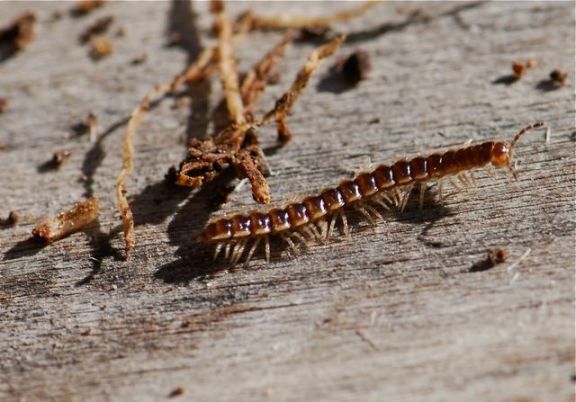
I’ll give you a hint. These seed pods have a wonderful odor.

Any guesses?
Edit:Â The answer is now up.

I’ll give you a hint. These seed pods have a wonderful odor.

Any guesses?
Edit:Â The answer is now up.
Can you imagine, the seeds in the bit of fluff from last week’s mystery seed can grow into one of the tallest eastern hardwoods?

This is the eastern cottonwood, Populus deltoides.
The species name comes from the “deltoid” shape of the leaves.

Cottonwoods often grow near water.

They have deeply grooved, braided bark.


In the fall the leaves turn a gorgeous golden yellow.
This last photograph is from here in Arizona.
Do cottonwoods grow where you live?
This week let’s continue tree science (see previous tree science post) by investigating water movement through trees, and learning how to measure the height of a tree.
Transpiration is a fancy word for the movement of water out of trees and other plants. Did you know that almost twice as much water enters the atmosphere through plants as through the surface of the oceans? (Another benefit of trees!)
Gather:
You might want to gather enough of these materials to compare branches on different parts of the tree and/or branches on different types of trees. (You will see the best results on a hot, sunny day.)
Place the bag over the tip of a branch so that it contains at least one leaf. Use the chenille or twist tie to close the bag around the branch to hold it closed. Make a prediction about what will happen. Now wait for 15 or 20 minutes and check the bag. See anything? Try again after 1/2 hour.
The bag should fill with moisture and condensation. Each tree leaf has tiny holes called stomata. Moisture exits the holes not only to cool the tree (like our sweat does for us), but also to help plants move materials up from the roots.
Were there any differences between different parts of the tree or different kinds of trees? What do you think would happen if you did the same experiment at night?
You can also perform this experiment indoors if you place a cut tree branch in a water-filled vase. Be sure to place the tree branch in a sunny window or under a bright lamp to encourage water movement into the plastic bag.
Extension (for older students):
Make up and perform experiments to test the factors that influence transpiration:

Where does the water come from?
Most plants and animals need a lot of water every day. Trees absorb the water they need through their roots and then move it up to the leaves through the xylem.
How far does the water have to travel from roots to top of the tree?
There are several different methods to measure the height of any tall object, including a tree.
Method 1 (requires math):
Gather:
For this activity, you will need a sunny day. Place the stick upright in the ground near the tree. Use the tape measure to measure the height of the stick from the ground, and the length of the resulting shadow from the base of stick. Also measure the longest length of the tree’s shadow from the base of the tree. Assuming the two ratios are the same, solve for the height of the tree by multiplying the length of the tree’s shadow x (the height of the stick/the length of the stick’s shadow). See the illustration:

I found this video that discusses another method. You will need a second person to help you and a measuring tape.
Now, how far does the water need to move? If you take into consideration that a tree’s root may be a large or larger than its crown, then a tree one hundred feet tall may have to move water two hundred feet or more. That one big straw!
Let me know if you have any questions or other methods for measuring trees.
© 2026 Growing With Science Blog
Theme by Anders Noren — Up ↑